





Clause provenance and transactional exceptions
Transaction research should reconcile signed instruments, amendments, schedules and disclosure materials before comparing clauses. If an executed amendment overrides a definition in the initial agreement, an extraction model that sees only the base PDF will produce a misleading result. The review register should preserve the controlling text, signature status and all referenced but missing schedules.
What the retrieved evidence can and cannot establish
Choose a transaction-specific exception taxonomy: consent requirement, change of control, assignment restriction, confidentiality, liability allocation or termination trigger. For each flagged clause, provide the exact document location and the ambiguity needing a human decision. The product is an evidence-backed issue list, not a declaration that a transaction satisfies legal requirements.
Transaction Document Intelligence and Evidence Mapping — research scope and evidence
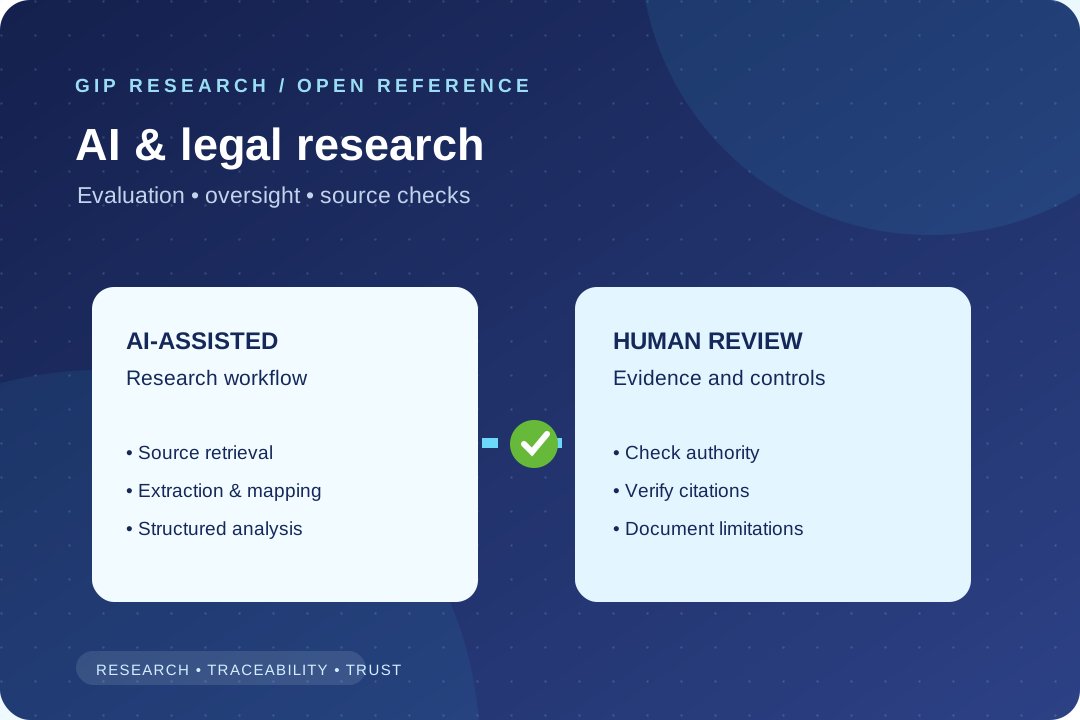
This reference sets out an evidence-driven approach to transaction document intelligence and evidence mapping. It describes potential research methods and the limits of their use; it does not report a commissioned assessment or a verified service commitment.
Research control 1: Determine which document versions are signed, superseded or still under negotiation
The substantive test is to determine which document versions are signed, superseded or still under negotiation. An analyst should identify the source required, state a falsifiable failure condition, and describe how a reviewer would confirm or dispute the result. A useful evidence row contains the item under examination, controlling record, selected passage, competing interpretation, current disposition and person responsible for resolution. If any of those fields is unknown, the output should disclose that gap rather than fill it by extrapolation. The test should be repeatable when new documents arrive or the governing source is amended.
Research control 2: Extract representations, covenants, conditions, indemnities and schedules into separate fields
The substantive test is to extract representations, covenants, conditions, indemnities and schedules into separate fields. An analyst should identify the source required, state a falsifiable failure condition, and describe how a reviewer would confirm or dispute the result. A useful evidence row contains the item under examination, controlling record, selected passage, competing interpretation, current disposition and person responsible for resolution. If any of those fields is unknown, the output should disclose that gap rather than fill it by extrapolation. The test should be repeatable when new documents arrive or the governing source is amended.
Research control 3: Track definitions and clause cross-references so isolated extraction does not distort meaning
The substantive test is to track definitions and clause cross-references so isolated extraction does not distort meaning. An analyst should identify the source required, state a falsifiable failure condition, and describe how a reviewer would confirm or dispute the result. A useful evidence row contains the item under examination, controlling record, selected passage, competing interpretation, current disposition and person responsible for resolution. If any of those fields is unknown, the output should disclose that gap rather than fill it by extrapolation. The test should be repeatable when new documents arrive or the governing source is amended.
Research control 4: Distinguish OCR uncertainty and incomplete exhibits from actual contractual ambiguity
The substantive test is to distinguish OCR uncertainty and incomplete exhibits from actual contractual ambiguity. An analyst should identify the source required, state a falsifiable failure condition, and describe how a reviewer would confirm or dispute the result. A useful evidence row contains the item under examination, controlling record, selected passage, competing interpretation, current disposition and person responsible for resolution. If any of those fields is unknown, the output should disclose that gap rather than fill it by extrapolation. The test should be repeatable when new documents arrive or the governing source is amended.
Research control 5: Map each requested diligence assertion to an exact clause and document version
The substantive test is to map each requested diligence assertion to an exact clause and document version. An analyst should identify the source required, state a falsifiable failure condition, and describe how a reviewer would confirm or dispute the result. A useful evidence row contains the item under examination, controlling record, selected passage, competing interpretation, current disposition and person responsible for resolution. If any of those fields is unknown, the output should disclose that gap rather than fill it by extrapolation. The test should be repeatable when new documents arrive or the governing source is amended.
Research control 6: Provide reviewer queues for exceptions that could change a transaction decision
The substantive test is to provide reviewer queues for exceptions that could change a transaction decision. An analyst should identify the source required, state a falsifiable failure condition, and describe how a reviewer would confirm or dispute the result. A useful evidence row contains the item under examination, controlling record, selected passage, competing interpretation, current disposition and person responsible for resolution. If any of those fields is unknown, the output should disclose that gap rather than fill it by extrapolation. The test should be repeatable when new documents arrive or the governing source is amended.
Hypothetical case 1: how an error might change the conclusion
Imagine that a signed amendment reverses an exclusivity obligation in an earlier draft. This is an illustrative scenario, not a report of an actual client project. The right response is to isolate the source record and version, identify why the initial classification is unreliable, obtain a second independent review and revise the exception schedule. The decisive question is not whether the model can produce a persuasive paragraph; it is whether the relevant evidence can be retrieved and checked by someone who did not build the workflow.
Hypothetical case 2: how an error might change the conclusion
Imagine that one schedule references a missing list of assigned software assets. This is an illustrative scenario, not a report of an actual client project. The right response is to isolate the source record and version, identify why the initial classification is unreliable, obtain a second independent review and revise the exception schedule. The decisive question is not whether the model can produce a persuasive paragraph; it is whether the relevant evidence can be retrieved and checked by someone who did not build the workflow.
Hypothetical case 3: how an error might change the conclusion
Imagine that an AI extraction confuses a condition precedent with an ongoing covenant. This is an illustrative scenario, not a report of an actual client project. The right response is to isolate the source record and version, identify why the initial classification is unreliable, obtain a second independent review and revise the exception schedule. The decisive question is not whether the model can produce a persuasive paragraph; it is whether the relevant evidence can be retrieved and checked by someone who did not build the workflow.
Proposed outputs and their boundaries
The following materials are possible research artifacts rather than guaranteed service offerings: Clause-to-document citation table; Version reconciliation ledger; Missing schedule inventory; Diligence exception priority list. The scope and format would depend on what evidence is available and what the requester actually needs to decide. A useful handoff explains which findings are documentary, which are interpretations, which require legal advice, and which fields have yet to be checked. An evidence-grounded request can be discussed through the Contact page, but no procurement, staffing or regulated-practice undertaking is implied by this reference.
Official reference and next research steps
Primary institutional entry point for verification: https://uncitral.un.org/en/texts. Consult the relevant original rules and documents for any time-sensitive or consequential conclusion. See also the parent reference hub and the site evidence policy.
Editorial verification note: this framework is not a case-specific finding; current office records, source permissions, jurisdictional law and professional obligations require confirmation for each actual matter.